Changing how we charged,
not what we built —
unlocked a new growth curve.
How we stopped asking media companies to pay for a SaaS subscription upfront — and started making it easy for them to say yes — turning a stalled pipeline into a deal every week.
The product hadn't changed. The market hadn't changed. But the way we were trying to enter it was fundamentally wrong.
Alqua was a MarTech SaaS platform — Big Data and Social Media intelligence for marketing and digital teams. The original business model was straightforward: three monthly pricing plans, sell to whoever needed the product, and grow through subscriptions.
After a prolonged period managing the departure of founding partners — nine months of legal process and complex agreements — we emerged with a clearer focus: media companies. Press, digital publishers, news organisations. They had the data needs our platform addressed and the marketing challenges our tools could solve.
The problem was that media companies, particularly in Spain, were not flush with budget. Print media was in structural decline. Getting a media company to commit to a monthly SaaS subscription required a procurement process, multiple approval layers, competitive tenders, and months of sales effort. We were spending enormous energy on deals that either didn't close or closed too slowly to sustain our growth.
Innovation doesn't always mean building something new. Sometimes it means changing the contract — who pays, when, and for what.
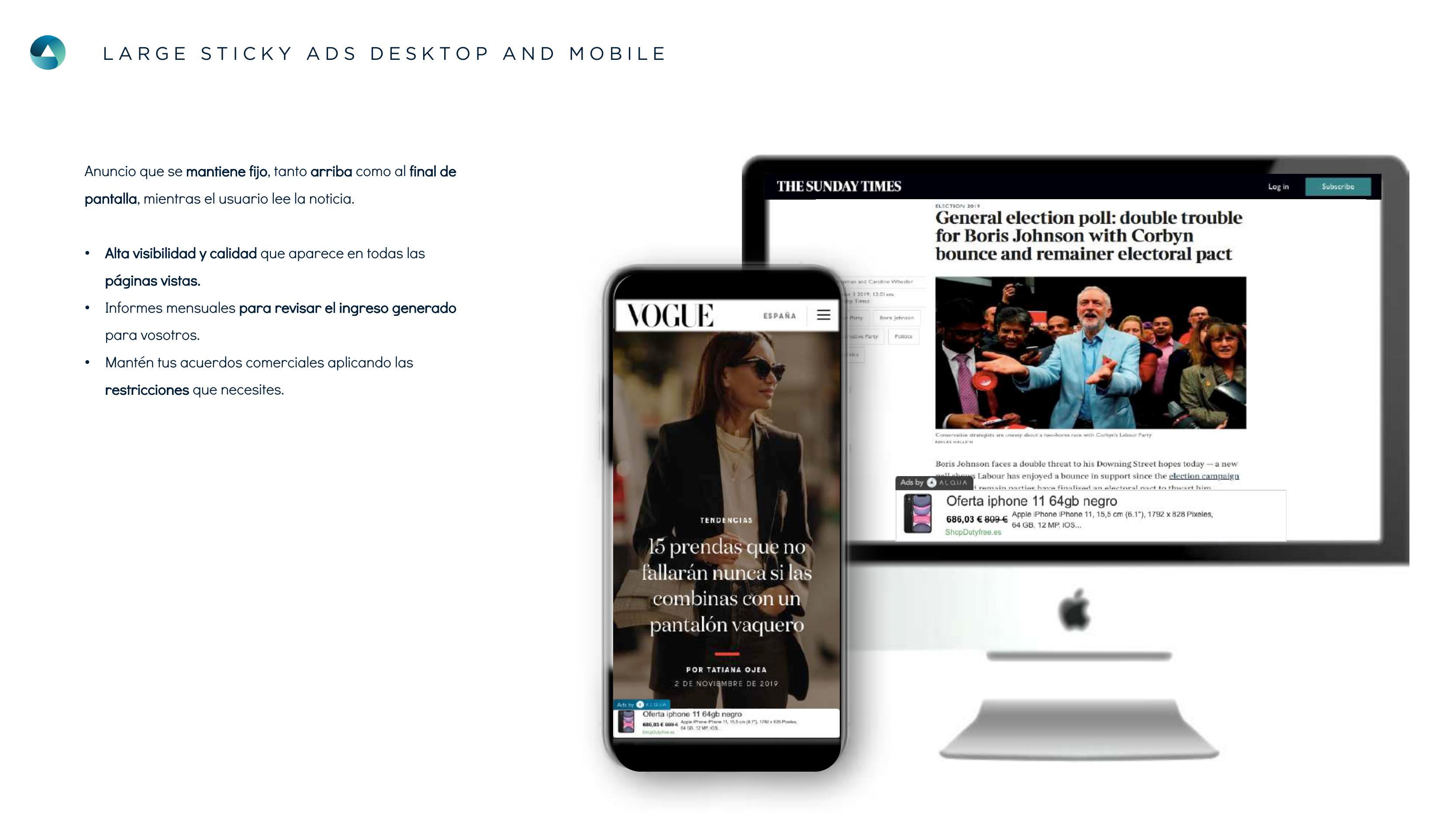
A media company that couldn't afford a subscription could say yes to a banner. The banner was the door.
The insight came from understanding how media companies actually made money — and what they were willing to spend on versus what they weren't. A media outlet struggling to justify a SaaS subscription would think differently about a banner placement on their own website. Advertising inventory was a familiar concept. It had a direct revenue link.
We studied Seedtag — a contextual advertising platform that had built a sophisticated publisher offering with multiple banner formats, creative options, and flexible commercial terms. We weren't copying — we were learning the logic of a model that worked and adapting it to a different context and customer base.
The model we designed: instead of asking media companies to pay for a subscription upfront, we would offer to place a banner on their site, monetise it through our partner network and direct commercial efforts, and share the revenue. The platform access came with the banner. The monthly fee was variable, tied to banner placement and type.
One of our key design decisions was to make the entry point as frictionless as possible. The banner setup process was engineered to be fast and mechanical — something that could be completed quickly without heavy involvement from the client's technical team. Speed of setup was a competitive advantage: if we could go from signature to live placement faster than anyone else, we reduced the risk of deals dying between contract and activation.
The hybrid model — banner-based entry with optional monthly plans — worked well in the Spanish market, where media budgets were tightest and SaaS resistance was highest. We validated the model there before considering other markets.
In Latin America, where media companies had different budget dynamics and less resistance to direct SaaS pricing, we continued selling monthly plans. The same product, two different commercial models, calibrated to market reality.
One of the most effective tools in the sales process was something deceptively simple: a personalised demo showing exactly how the banners would look on the client's own website before they signed anything. We would mock up the Sticky Ad and In-Image Ad formats in the client's actual site environment so they could see the placement, the visual weight, and — critically — how non-intrusive it was.
This addressed the most common unspoken objection: that advertising would damage their editorial credibility or disrupt their readers. Seeing it rendered on their own pages, in context, removed that fear more effectively than any explanation could. The demo converted hesitation into commitment.
A deal every week instead of every month. The barrier to entry had been the product all along.
Deal cadence
vs monthly before the model change
Customer retention
Across the Alqua client base during this period
Commercial models
Spain (hybrid) and Latin America (SaaS) — calibrated to market
Before the model change, we were closing clients roughly once a month — each deal the result of weeks or months of sales effort, procurement processes, and price negotiations. After the model change, we were closing deals every week. The barrier to entry had been so high under the old model that most prospects never became clients. Under the new model, the barrier was close to zero.
The 80% customer retention rate we achieved during this period was partly a product story — we had built something genuinely useful — but it was equally a model story. Clients who had entered through the banner were already integrated into our platform, already seeing value in their data, and already aware of what upgrading their plan would unlock. The upsell conversation happened naturally, not as a sales push.
Pricing is a product decision. How you charge shapes what customers value, how they engage, and what growth is possible.
This is the case I think about most when someone talks about product innovation. The instinct in most product teams is to solve growth problems by building more — more features, more integrations, more capabilities. Here, the growth problem was solved entirely by changing the commercial terms. The product didn't change. The market didn't change. The contract changed.
Pricing is a product decision, not a sales decision. How you charge shapes what customers value, how they engage, and what growth path is available to you. Moving from pure subscription to a hybrid revenue-share model didn't just change our conversion rate — it changed our relationship with clients. They came in as partners in the revenue, not as buyers of a service.
The entry banner was never the destination — it was the door. Once a media company was live on the platform and seeing value, the plan structure became an obvious upsell. The goal over time was to shift the revenue mix toward higher fixed income per client, reducing our dependence on advertising performance while increasing the client's switching cost.
“The fastest way to grow was not to improve the product — it was to remove the reason people weren't buying it. Sometimes the barrier isn't what you build. It's what you ask for in return.”